

 Tiếng Việt
What Is a Peristaltic Pump? Working Principle and Practical Applications
What is a peristaltic pump, and why is it so frequently mentioned in pharmaceuticals, biotechnology, and laboratories? It is a type of pump that uses rollers to compress a flexible tube to displace fluids, rather than relying on valves or impellers like conventional pumps. Thanks to its simple yet effective design, the peristaltic pump has become the top choice for applications requiring high precision and purity.
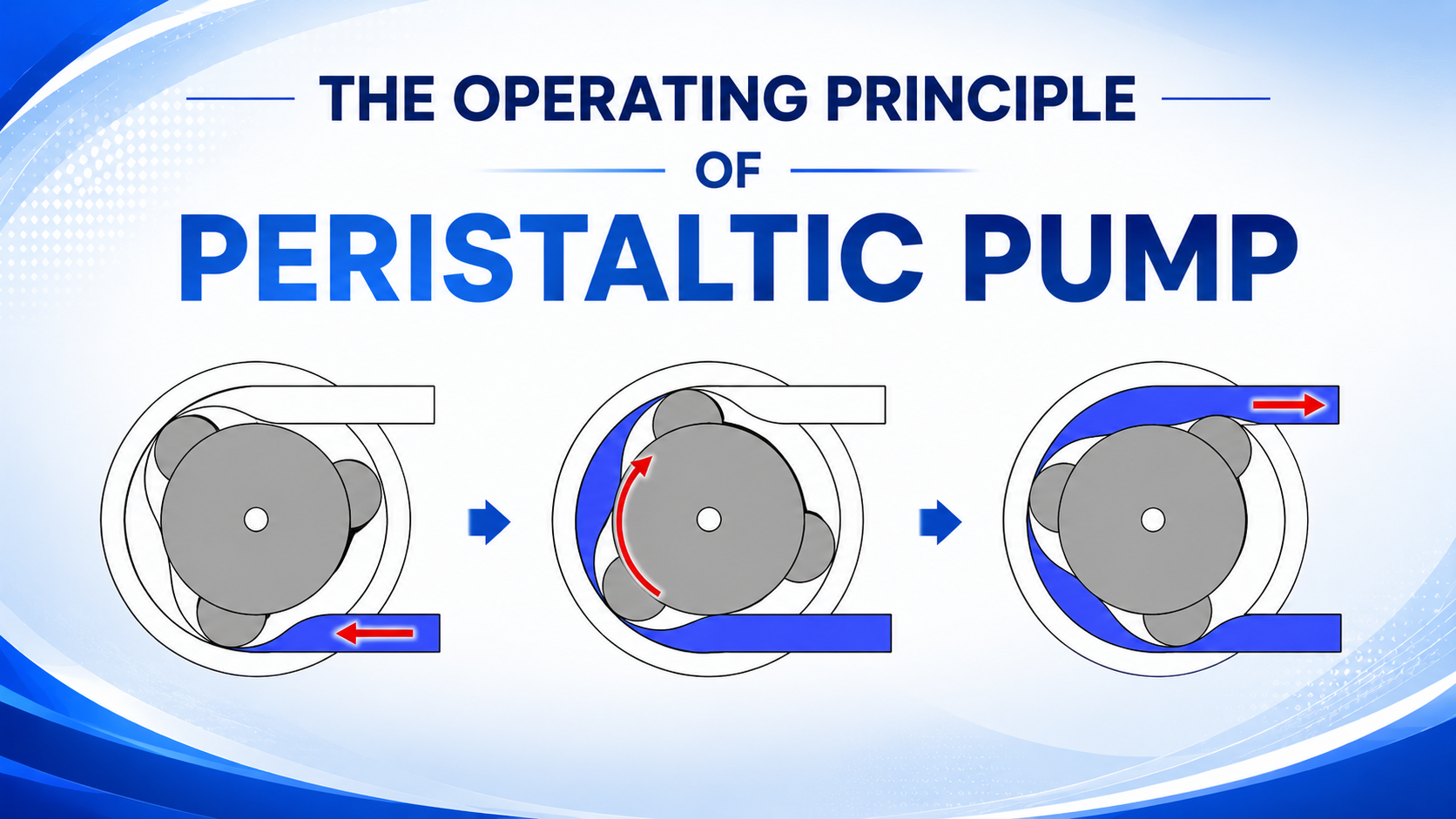
What is a peristaltic pump?
A peristaltic pump is a fluid transfer device that operates on the principle of peristalsis—mimicking the natural contraction movements of the human intestine. The fluid only comes into contact with the inner surface of the flexible tubing, never touching any mechanical parts of the pump.
Working principle of a peristaltic pump
A series of rollers mounted on a rotating rotor sequentially compress a section of flexible tubing placed inside the pump head. The occlusion point moves along the tube, pushing the fluid ahead while creating a vacuum behind to draw in fresh fluid. This continuous cycle generates a stable flow rate that is nearly linear with the rotational speed.
Why are peristaltic pumps so popular?
- No cross-contamination: The fluid remains entirely within the tubing, making it easy to maintain sterility.
- Minimal sample damage: Low shear force makes it ideal for sensitive cells and biological molecules.
- Simple maintenance: Simply replace the tubing—no need to disassemble the pump for cleaning.
- Accurate flow rate: Easy to calibrate, making it perfect for dosing and dispensing.
Applications of peristaltic pumps
These devices are widely used in GMP-compliant pharmaceutical production, cell culture, water treatment, food processing, and many other industries. To gain a deeper understanding of how to choose the right peristaltic pump tubing for your specific application, feel free to read NOVALAB’s dedicated article.
According to VWR’s (Avantor) Masterflex peristaltic pump solutions page, this product line has set global standards for accuracy and repeatability for over 55 years.
Frequently Asked Questions
How does a peristaltic pump differ from a centrifugal pump?
A peristaltic pump has no impellers or fluid-contact chambers, whereas a centrifugal pump relies on a rotating impeller to generate force. This key difference ensures that peristaltic pumps cause significantly less damage to sensitive samples.
Are peristaltic pumps expensive?
While initial investment costs depend on the required flow rate and configuration, long-term operational costs are typically lower due to minimal wear and tear on mechanical components.
If you need technical advice on selecting the right Masterflex® peristaltic pump system for your application, the NOVALAB engineering team is always ready to assist you.
Discover GMP-Standard Masterflex® Peristaltic Pump Solutions
Explore detailed solutions, practical applications, and how NOVALAB deploys them for laboratories & manufacturing plants.